Archives For Step 4 – Get to Know ‘em!

Congratulations, it’s time to interview your top candidates! You’ve been working diligently through the steps of the recruiting process and you’ve narrowed the field to a few top candidates. Now it’s time to bite the bullet and conduct interviews. “What’s Love Got To Do With It?”  Everything and nothing! What better way to explore this emotional time in the recruiting process than quoting this iconic song?

“You must understand That the touch of your hand Makes my pulse react”

From the first handshake and introductions to the final thank you’s; it’s common that both the interviewer and the interviewee’s pulse will react. We are all human and our heart rate and blood pressure are likely to rise in any stressful situation. Interviews are no exception.

One way to manage the stress is preparation. Have a game plan. Know what the goal of the interview is, and have a prepared set of questions that you will use to achieve that goal. Before the interview, study up on the candidate too. Review everything you already know about them; re-read their application, resume, results from tests or assessments, and their LinkedIn profile.  Make a list of candidate specific questions that you want to ask in addition to the ones you have already prepared.

“You must try to ignore that it means more than that …”

The overall goal of interviews is to gather additional information to aid in making a selection decision. You are likely also trying to get to know the candidate to find out if they will be an asset to the team and pleasant to work with. Every aspect of the conversation is important, from the candidate’s initial contact with security or reception personnel at the front door to body language and communication style during the interview.

There are a number of possible specific goals for the interview. Your specific goal for the interview may depend on the job title you are filling. The specific goal of the interview will impact its structure and content.

For example you might be assessing technical knowledge, and ask the candidate to perform technical tasks to demonstrate knowledge. Or,you might ask the candidate to solve a coding problem on a whiteboard, assembling a product from instructions, or producing a writing sample.  Alternatively, you might be exploring specific soft-skills including personal motivations or work behaviors like the ability to manage multiple simultaneous projects and teams. You might probe for this behavior by asking the candidate to reflect on how they would respond to a situation you present.  Another goal of the interview is to verify details of past work experience as a way of exploring personal integrity issues, past accomplishments and experience  appropriate to this opportunity.

“It may seem to you that I’m acting confused”

Sometimes candidates find details of the opportunity confusing and want additional clarification. It’s important to allow enough time in the interview to give the candidate an opportunity to ask questions too. Listen carefully to the questions the candidate asks. These questions are important and  might give you insight into their past challenges or about employment issues important to them. In the best case the candidate might express an eye-opening concern that indicates to you that they have gone the extra mile in preparing and thinking about the company and the opportunity.

Remember that in a one or two hour interview you won’t be able to learn everything about the candidate, so use your time to find out about factors you know to be important for on-the-job success.

“I`ve been thinking of a new direction but I have to say I`ve been thinking about my own protection”

When you’re hiring be aware that you are considering a new direction –  in the form of a new person who will be joining the company. Everyone involved, the candidate and the employer is also thinking about their own interests and about protecting themselves.

You, representing the employer, want to avoid a variety of possible negative outcomes. Those include possible liability and the costs of a mis-hire. Additionally, you want to get the right person in the job. Typically, the candidate wants to be sure the new position includes the opportunity to learn more, earn more and do more. The candidate also doesn’t want to quit his or her current job, only to discover that they don’t get along with the manager. Neither the employer nor the candidate wants to discover down the road that the new opportunity is a poor fit. Everyone involved is assessing risk and acting to protect themselves. After all…”Who needs a heart when a heart can be broken?”

By TimDuncan (Own work) [CC BY-SA 3.0 (http://creativecommons.org/licenses/by-sa/3.0)], via Wikimedia Commons

By TimDuncan (Own work) [CC BY-SA 3.0 (http://creativecommons.org/licenses/by-sa/3.0)], via Wikimedia Commons

“Oh what’s love got to do, got to do with it?”

It’s easy to fall in love with a candidate during an interview when you discover that you share similarities Perhaps you graduated from the same college or know people in common. Other similarities might be more obscure – like discovering a shared hobby or interest. But love is not necessarily the only emotion to focus on during an interview. It’s possible to really love a candidate during the interview, and realize that despite the feeling of personal affinity, they are a poor match for the job.

There are times when you might find that candidates you are interviewing are dissimilar from you. For example when a founder or CEO who is focused on sales, interviews candidates for a key accounting position, that founder, an extrovert with a customer-focused sense of urgency, might be put off by the reserved, methodical and detail orientation that a well qualified CFO or Accounting Manager exhibits during the interview. If you’ve been in this type of situation you know that these types of differences might prevent you from feeling personal affinity and you might not fall in love with ANY of the candidates, even though one or two might be well a great asset to your company.

In this case, on-the-job success is more likely with a candidate who exhibits certain types of behaviors which are different from the CEO. This is a case where the interviewer might NOT feel personal affinity or love for the best qualified candidate. You might find yourself in a position where you have to overcome a feeling of lack-of-love in order to make a solid hire.  Remember what Tina said…” What`s love but a second-hand emotion?”

Tina Turner taught us a lot about love and a lot about interviewing. Here a few key take-aways:

  1. You might feel nervous – but preparation will carry you a long way

  2. Know what the specific goal of the interview is – are you assessing technical knowledge, social skills, or work behaviors, or a combination of all three?

  3. Make sure that there is time to address the candidate’s questions – you can learn a lot by listening to the candidate’s concerns

  4. Every job deserves the right person – and you, the interviewer, might not feel personal affinity with that best candidate, especially if you are hiring them to do a job very different from your own.
FacebookTwitterGoogle+Share

Recruiting Q&A

During a conversation in May with some of the top executives at small and mid-sized businesses nationwide, NewHire asked them to write down what questions they had about recruiting. Many of the questions we received in response fell into categories that we define in our 6 Step Recruiting Process.

Below is part two of a two part blog series outlining answers to those pressing questions. To see Part One of this blog, and the first three steps to the recruiting process, click here.

Step 4: Interviewing

Q: How do I interview to know if someone will fit in sales?

A: The recruiting process for sales reps should mirror the selling process for your sales reps as closely as possible. Be polite during an initial phone screen, but don’t be afraid to tell a candidate, “I’m not so sure this is going to work.” Their answer to that comment will give you an idea of how good they will be at handling objections.

Also, if you think you have the right candidate, give them a chance to close. Forget about the candidate for a day or two and see if they call you to follow up.

Finally, there are a variety of sales assessments available on the market that can pre-screen candidates for you so that you’re only talking to people who will fit in sales. Do some research, think critically, and decide if you want to invest in one that will help you find the right people.

Q: How can you match personality to company culture – during an interview, when people often don’t show their true personality?

A: We try to gauge “personality” or work behaviors, motivations, and personal drive in every step of the hiring process. From the initial application to the phone screen to the in-person interview, collect as many data points as you can about a candidate. If you still think they’re not showing their true colors, be up front with them. Ask them if you can expect to see the person they are presenting once they start with your company. Make it clear that if they’re not, both parties will be negatively affected. Being up front, even this late in the process, can definitely save you some headaches (and money) a few months down the road.

Step 5: Assessing

Q: When hiring for outside sales, how much weight do you give to sales assessments like Sandler?

A: This is very dependent on the job you’re advertising. If it’s a really good job in a talent-rich market, you’ll have enough candidates where you can afford to only talk to the candidates who pass the sales assessment that you subscribe to.
If it’s a really competitive market and you don’t have a wealth of candidates, it’s possible that you’ll have to make some exceptions or extend your search in order to find the right person. If you are having a difficult time getting enough recommended candidates from your assessment, look more carefully at the rejected candidates. Are there some that are close to right and have weaknesses that you can work with?

Q: How can we really find out how they performed in previous jobs?

A: Reference checks are good. But the word “really” in this question makes me think that person who asked might have been burned in the past. Sometimes, a bad reference check just serves as a peace-of-mind facilitator for the hiring manager.

Asking a candidate for proof of success can work. How many times has a sales candidate told you they were leading their previous company in sales and exceeding margins by 40%? A good response to this would be, “Hey, I’ve heard this from candidates in the past and ended up getting burned. I’d like to believe you, but I’d be more comfortable if you provided proof of your success. Can you?” They don’t necessarily have to, but their answer to this question can be a valuable indicator of success.

Step 6: Making an Offer

There were no questions about extending an offer to a candidate. However, things can definitely go awry if you’re not thinking this step through. Making a good offer that reflects the nature of the conversation you’ve been having with your top candidate is important. Be prepared to negotiate, though, especially with top talent.

Other

Q: What’s the path of least resistance in recruiting, no matter the position?

A: I’m tempted to say, “Call NewHire!” Look, recruiting is not easy. It takes planning and execution, just like everything else in business. Easy processes with bad tools yield less than desirable results. You’ll pay for those results down the line.

Doing some work up front to define your target candidate and employee value proposition, write a killer job advertisement, and advertise it widely will get you good results when it comes time to narrow the candidate pool, interview the top 10% and finally make an offer.

The path of least resistance is still going to be difficult, but it will also be worth it. Great companies big and small have one thing in common: they put a great deal of energy into hiring well. They understand that in order to get the bus going in the right direction, you have to have the right people on that bus. That means hiring well should be hard. But it will be worth it.

A phone interview (or phone screen) is a useful first step in getting to know a candidate.  It’s a convenient way to determine which applicants that passed an initial eye test are worth bringing in for in-person interviews and which should be avoided. However, the way that you prepare and conduct a phone screen is a major factor in how useful it will ultimately end up being.

Where better to look for those best practices than from folk icons Simon & Garfunkel?  Okay, that’s a bad transition. But there is a connection between four of the duo’s biggest hits and how to conduct the perfect phone interview. Here are four key tips from the singer-songwriter team to improve your phone interviews:

Phone Interviewing Tips from Simon and Garfunkel“Wednesday Morning, 3 A.M.” – Pick a Scheduled Time (Tip: Not 3 A.M)

The first step of conducting a phone interview is scheduling. Occasionally, when I’m scheduling a time by phone, a candidate I call will ask if we can complete the phone interview right then and there. After all, you have them on the phone and it may be convenient for both of you to just get it out of the way.  I almost always turn these offers down though, because I find scheduling a time later to talk is better for a few reasons.

First, by giving candidates time to prepare and look over the position they applied for again, phone screens tend to be more organized, professional, and productive. Second, by actually having an appointment and setting a time to speak, you’re making sure that the candidate has the ability to follow-up on their commitments.

“Mrs. Robinson” – Plan Your Phone Interview Questions and Have Them Ready

We’d like to know
A little bit about you
For our files

Yes, I’m cherry-picking this lyric a bit, but it fits! Defining what you want to know from a candidate before the interview is important.  By either writing down or typing some questions you want to ask during the interview, the phone screen will go much more smoothly.  And while it’s OK and even a good idea to break script and ask follow-up questions, having questions in front of you will help make sure you get to everything you wanted to. It’s also a great way to make sure you take notes on a candidate’s answers.

Interviewing Tips

“The Sound of Silence” – Don’t be Afraid of Silence

In conversation, extended periods of silence can be awkward and uncomfortable.  During phone interviews, however, silence can be a valuable tool in prompting the candidate to reveal aspects of themselves.  It’s sometimes difficult for phone interviewers to let a question sit and breathe. That’s particularly true if it is a difficult question. It’s natural to want to give someone an easy out by asking another question or skipping over the question. However, I would recommend letting the silence linger for a moment, partially because it allows the candidate to formulate an answer and partially because candidates are afraid of silence, and by not letting them off the hook, you can gain some interesting insight when the candidate is forced to answer. That insight is what we’re looking for when we decide to do phone interviews in the first place. We want to get to know them.

“Bridge over Troubled Water” – Ask Revealing Behavior Questions in a Phone Interview

Candidates can’t get a job because of a phone screen, but they certainly can lose out on one. By asking questions that get after candidates’ work behaviors and employment history, you can gain a better understanding of the type of employee they are potentially going to be.  To use an analogy, some people tend to be a like a calm, tranquil lake – easy to get along with and relaxed. Other candidate personalities are closer to choppy rapids – they can be abrasive and can draw conflict and arguments. A question such as “tell me about a conflict you’ve had in the past and how you worked to resolve it” will allow you to start to assess what type of candidate you’re speaking with.

Additionally, asking questions about a candidate’s work history and why they left certain positions can also be enlightening. Badmouthing previous employers can be a bad sign, particularly if it is a trend. If a candidate had a poor employer, it’s unfortunate. If they’ve had 3 or 4 bad employers, there’s a common denominator there: the candidate.


By integrating these four tips into how you perform phone interviews, you’ll see an improvement in the helpfulness of the call and the information received.

ciGjd01427822521“I don’t mind doing interviews. I don’t mind answering thoughtful questions. But, I’m not thrilled about answering questions like, ‘If you were being mugged, and you had a lightsaber in one pocket, and a whip in the other, which would you use?’ ” – Harrison Ford

Though Harrison Ford wasn’t referring to job interview questions, but rather questions he receives from entertainment reporters, the sentiment is still the same. The finite time that you have with a candidate during a job interview is extremely valuable. It is vital to make sure that time is spent wisely. Any time that you are able to spend with the person who could potentially fill your organizational need is an opportunity to learn valuable insight.

In addition, in the current employment climate candidates are not as plentiful. They will be scrutinizing your job interview strategy as much as you will be scrutinizing their answers. Below are some tips to steer your job interview in the optimal direction.

Will the person in the job interview meet your need?

There are a variety of ways to ascertain this information. You will never know for sure until that person is working in the role, but you can utilize the job interview process to develop an excellent guess. Is it a position where they have to have excellent Microsoft Office skills for instance? If so, have them create a spreadsheet in your office or dictate information that you need them to capture it in a Word document. Need an excellent Outside Sales person? Take them on an appointment with you, and see how they interact with the clients. There are a multitude of things to do in order to see first hand if they can produce the kind of work that you want in your organization. Some of these things can’t be seen in a traditional job interview.

Can you afford to work together?

It is a candidates’ market now. And candidates are quick to negotiate or even turn down an offer that does not meet their financial needs. Though the topic of money and benefits is traditionally found to be uncomfortable or inappropriate in the beginning of the job interview process, getting the compensation out in the open early can save an immense amount of time for both parties. You may have someone who is the right skill fit but is expecting twice as much as you are offering. It is key to be on the same page regarding deal breakers such as this, in order to move on quickly to those that are more aligned for the position.

Will it be a mutual culture fit?

A key issue to determine probability for a long term relationship is whether or not the company embraces the new employee and whether or not the employee will embrace them. A way to uncover that is to ask how the candidate enjoys spending their leisure time, and allow them to ask you questions as well. Have some additional staff interview your candidate, or invite them to a staff meeting so they can get a clear picture as to how your business operates.

These are a few ways to think about conducting your job interviews to get the information that you really need to make a successful hire. What are other things that you think are important to understand during the interview process?

Teamwork is so important that it is virtually impossible for you to reach the heights of your capabilities or make the money that you want without becoming very good at it.” –Brian Tracy

improving company culture

Once you have completed the hard work of recruiting and hiring it is now important to create, or expand on the essential – and sometimes overlooked – process of team building. A team that garners an attitude of trust and respect is tantamount to success.  If your employees know that they are all working toward the same goal, the individual efforts can quickly turn into fulfilling group collaborations.  Here are some suggestions for improving company culture to bring your team together.

Physical activities

The engagement of physical activities with your employees is an excellent way to not only promote health and wellness, but also promote the bonding that is unique to exercising with others. The experience of joining together in this setting can easily translate to the work environment and allow for your employees to trust each other in a different way.

The range of physical activities is extensive and can range from an office hike (if you have a smaller team) to large interdepartmental softball teams. For example, the J.M. Smucker Company holds bowling nights and softball games for its employees, and TIAA-CREF employees can play up to six sports on site. Getting people to work together on teams outside of the workplace is awesome for improving company culture. 


Attend a Speaking engagement

There are a multitude of speakers that discuss topics that can be transformative professionally and personally. Choosing a speaker that will educate your team in your field or that will enhance their personal lives is an excellent way to join together and encourage collaboration. A great way to gauge interest is to poll the work-force to see what kind of speaker or what specific speaker would be most appreciated. Successful personal and professional speakers include Eric Thomas, Ray Lewis and Steven Covey.
 

Surrounding area tour

Touring the town or city that you live in by boat, bus, or walking is a great way to get to know your environment with your employees and explore common areas of interest. It is especially welcoming to employees that you have relocated or that are new to the area. If you’re in a city, visit the historical district. If you’re in a rural area, take a farm/woods/park tour.


Scavenger Hunt!

Working together on a scavenger hunt is an excellent way for your team to collaborate as well as allow individuals to reveal their different skills sets under the high pressure circumstances. Everyone’s strengths and innovations are clearly on display during this challenging and surprising game, and it is a great opportunity for your team to gain new perspectives of one another.

The most comprehensive scavenger hunts ask participants to take photos of certain items with team members and give points for each photo taken. High scoring photos might include, “Team members with a Speed Limit sign that is not a multiple of 5.” Low scoring photos might include, “Team members assisting someone with their groceries.”

For a great Chicago Scavenger Hunt, please visit NewHire’s valued client, Windy City Fieldhouse.


Supporting your team members personal endeavors

If members of your staff are pursuing acting, sports, or another personal hobby, attending their event is a great way to recognize who they are as individuals outside of work, as well as build camaraderie. A show of appreciation for your team after work hours is a great reflection on how much they are a valued not just for what they do but for who they are.

 
Not only does team-building drive growth and productivity, but it also makes hiring and recruiting much easier, as it helps your company gain positive reviews on websites which are often visited by job applicants. These are a just a few examples on how to foster team work in your organization. Do you have any fun things in mind for improving company culture?

blog post


Searching for a job is a lot of give and take. Especially if you are brand new to the workforce (see: the author of this post), it can be a lot more giving than taking. After all, you are leveraging a limited amount of experience against high ambitions.

“What’s your expected salary?” they ask, and you mumble back something about how your roommate with the same level of education and skills is making enough money to pay rent and buy a venti mocha every day, but you might settle for just the rent.

You apply, apply, apply and for every 30 applications, you hear back once. And if you are lucky enough to make it through a phone screening and two interviews, you have to wait. Whether two hours or two days, that wait can be nerve wracking. But if all goes well, you are hired.

Truth be told, the entire process is daunting and long. Not to mention, if you are anything like me, you may have jumped the gun on signing a lease and moving out of mom’s house before you had a job locked up.

Luckily, there are a few steps you can take that make finding the right job — and helping the right job find you — easier.


Let them see you:

A lot of job applications offer questions that are meant to weed out unqualified candidates. These screening questions allow hiring managers to see only the applicants who have the characteristics they find most important. They save both parties — employer and candidate — time and money. When faced with such questions, it is important not to sell yourself short. If you are applying to be a reporter for a newspaper and they ask for years of reporting experience, don’t leave out those four years in college you spent on the school newspaper. Experience is experience.

That being said, be honest. In the same way that you feel you deserve the right job, the companies with which you are interviewing deserve the right employee. If you aren’t qualified for a position, don’t waste your time or the time of the company by exaggerating or embellishing your skills.


Let them hear you:

If you have been invited for a phone interview, or better yet an in-person interview, wake up at a reasonable hour and prepare your mind and body for the day. Speak loudly and clearly. Be confident. I am certain I was screened out of the first job I received a phone interview for because I woke up just as they were calling and sounded groggy and slow. After that, I started to treat my job search as if it were my current job. I woke up early each day, got the coffee brewing, and went to work searching for a job.


Let them know you care:

If you’re unemployed or working a part-time job, but you are looking for a full-time position, use your downtime wisely. Prepare for common interview questions like:
What are some of your strengths and weaknesses? What was something you liked or disliked about your last job? Where do you see yourself in 5 years? Also, take some time to research the companies you have applied to. How do they serve their clients? How do they make money? Do they do any philanthropy?

This allows you to give thoughtful responses that might set you apart from your competition. When you get an interview, make sure to follow up afterward and let the company know your level of interest.

If you find that you have a lot of downtime, take some online tutorials on different skills that might be useful at the jobs for which you are applying. While I was job searching, I learned HTML programming and Microsoft Access for free on the Internet. Through those tutorials, I was able to put new skills to use in my job at NewHire.


Know what you’re looking for:

This is perhaps the most important thing to consider. When I was looking for a job, I started out not really knowing what I was looking for. I was thinking that I needed a high-paying position at a huge company, because I was a college graduate, darn it. As I continued searching and considered my past employment, I realized that the best thing for me would be an entry-level position where I wanted to live (Chicago) at a company that would let me express my passions for writing, interacting with the people around me, and maybe even telling a joke or two along the way. I wanted the room and freedom to grow at a company that valued growth.

When I started thinking about what I wanted to be doing each day, my job search narrowed significantly. Enter NewHire, who screened me, called me, interviewed me, and hired me after a few days of nervous wait time. Now I’m talking with people from all over the United States, writing blog posts, working on a team, and, yes, even cracking a joke or two. How’s that for a job search?

If you think you are ready to put yourself out on the employment market, check out our job board. We update it constantly with new positions available all over North America. If you are more of a social media guru, check out our Twitter and Facebook pages for frequent #hiring updates.

what to listen for when phone screeningPhone screening candidates is an underrated piece of the recruiting and hiring process. In many cases, you hear about resume stacks and interviews but nothing in between. In reality, phone screening bridges the gap between deciding who catches your eye and who you want to actually interview in person. But what does a phone screen actually entail and how do you know if it’s a good one? How do you know what to listen for when phone screening?

As I said, phone screens serve as an intermediate step, helping you determine who is worth interviewing on-site. Those on-site interviews are long and often take time out of several schedules in order to run smoothly. Phone screens, on the other hand, are quick and painless. A typical screen should last 10 minutes and be a handful of thought-provoking, open-ended questions.

You can ask all kinds of questions (within the realm of legal questions, of course, and there are plenty of illegal questions you can ask) as long as you’re asking the same questions to everyone. You should have a template pre-made and use it for each of your phone interviews.

Once you have that template of questions, you know what you’re going to be asking. But how do you know what to listen for when phone screening?

What to Listen for when Phone Screening

The one thing that should always be on your radar when conducting a phone screen is confidence. The type of confidence will vary based on position – think charismatic confidence for a sales representative vs. knowledge-based confidence for an accountant – but it remains important that the person makes you believe that they know what they’re doing. A candidate who can’t make you believe that they’ll succeed is one that you probably don’t want to hire.

Of course, some people just get nervous over the phone or in interviews. It happens. That’s okay, too.

Bear in mind that your perception will be influenced by what position you’re trying to fill. A customer service rep will need to be friendly, outgoing, and some level of cheerful in their job so it stands to reason that they must come off that way during an interview. If you’re speaking with someone who doesn’t exude confidence and it’s for a position that requires hard skills more than it does personality traits, you can find out what you need to know by asking knowledge-based questions.

Does your applicant know how to use Quickbooks? Can they explain how they would handle a certain software malfunction? Can they tell you about a project they’ve led in the past?

Each of those answers will present you with an impression of their confidence (or lack thereof).

But be warned; confidence is best in moderation. A phone screen candidate who picks up the phone and says, “Cancel the rest of your calls – I’m getting this job!” might be a bit overbearing. Phone screen candidates who ignore your questions to tell you how great they are have a way of finding themselves in the “thanks but no thanks” pile real fast.

Be sure to consult your original job advertisement and look back at what your key accountabilities are for the job. Set up your phone screen to ask about those things and take notes as the candidate talks. You might not remember everything they say, but your notes will fill in the blanks and you’ll have a strong understanding of the kinds of people you’re seeing.

things you can't ask during an interview

Liability is a real threat and there are plenty of ways to get yourself in trouble and prompt discriminatory-practice lawsuits. Whether you’re still in the phone-screen stage or doing face-to-face interviews, there are certain pieces of sensitive information that you, the hiring party, can’t ask during an interview.

Here is a sampling of things you can’t ask during an interview:

  • Age
  • Religion
  • Nationality
  • Marital status (including maiden names)
  • Sexual orientation
  • Child-bearing status
  • Arrest record
  • Current health or disability status
  • Living situation
  • History of bankruptcy
  • History of disability insurance
  • Organizational memberships

Remember this when you’re looking to make a hire: Not everyone will come into an interview and look for ways that you’re discriminating or ways that they can hold you liable for improper hiring practices. However, some people will be aware of things that are sensitive for an employer to hear, and they may be prepared to use those against you if you don’t hire them.

That’s why you need to be aware of the things you can’t ask during an interview. Sometimes these questions can come up in natural conversation, but you need to know that you cannot ask about them without facing liability.

On a similar topic, lots of hiring companies are turning to social media to aid in their hiring processes. I cannot discourage this strongly enough. All of the bullet-points above are sensitive information that can be used in discrimination lawsuits, so hiring companies need to be careful when dealing with any of those topics.

Think for a moment about your Facebook page and how many of those info-areas can be discerned from your page. Probably a lot, right? That means you shouldn’t be using Facebook to find out about your candidates, as you’re learning sensitive information.

There are third parties who will look up information about your potential employees and can browse social media sites for you, and they’ll protect the sensitive information from reaching your eyes and ears. If you’re that concerned about what someone is doing with their personal lives, third parties are the way to go. However, if you can stand to avoid the dangers of learning sensitive information – and encountering the threat of hiring discrimination – then I suggest avoiding it.

Admittedly, most job-seekers are not applying for jobs for the purpose of creating lawsuits. These are all things that will protect you and would really just steer your interviews off-track and ultimately lead you into dangerous territory. You can’t help it if the information is offered to you, but do not ask.

phone interview

It happens; a candidate drops a bomb during an interview that disqualifies them with one answer.

Once, in response to the most average question, “Why are you looking for a new job?” I heard quite a surprising (and somewhat embarrassing) answer.

The candidate explained in overly much detail the (failing) romantic relationship she was having with her boss. She elaborated that she needed a new job so she could end that relationship. She demonstrated poor judgment by telling me way too much personal information. (I can’t really comment here on the complicated issues involved in work-place romance which may, or may not, be reflective of additional poor judgment.)

Most of the time, candidates give answers during interviews that aren’t clear cut disqualifiers. Consequently, it’s important to listen hard during a phone interview to discern any warning signs. Some answers to interview questions might provide subtle indications that the candidate won’t be able to perform on the job, isn’t being exactly accurate with details on the resume, is a poor culture fit, or doesn’t have the right skills to be successful.

Here are 5 things to listen for:

1. The candidate demonstrates good judgment.

Under pressure, can the candidate make a sound decision that is inline with the core values of the employer? Can they provide information in way that is appropriate for the situation?

2. The candidate demonstrates self-awareness. 

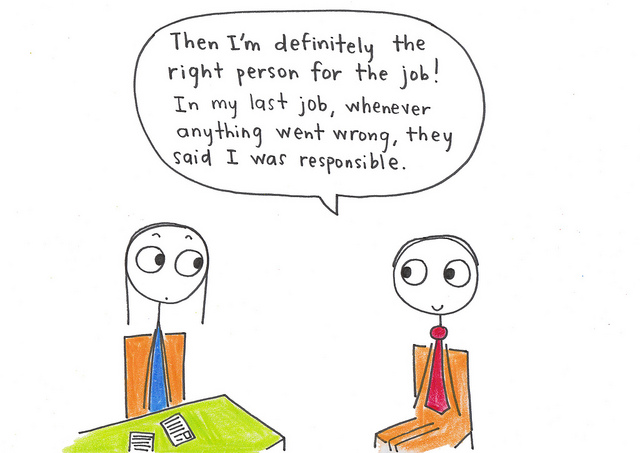
Does the candidate demonstrate that they understand the value of their job, both for themselves and for the mission of the company? Can the candidate identify past mistakes and express a better course of action for next time? Do they bad mouth past employers? Do they take responsibility for their actions or cast blame?

3. The candidate speaks clearly about the duties and responsibilities of past jobs.

Can the candidate explain what they were doing and why? Finding this is one way to explore if details of the resume are accurate. The interviewer can also learn if the knowledge and experience gained in past employment will be valuable in the new position.

4. The candidate is knowledgeable about the products or services provided by the current employer.

This is one way to learn if the candidate is engaged at work. If the candidate is checked-out in the current job, what’s the likelihood for engagement in the next position?

5. The candidate asks thoughtful questions.

Thoughtful questions let the interviewer know what concerns the candidate has about the current opportunity. Did the candidate step up and do their homework? Lastly, the questions asked, can help determine if the candidate is a good match for the culture, values and mission of the employer.

If the candidate can’t satisfy any two of these five items, it’s probably a good idea to quickly and tactfully say “no thank you.”   At the very least, you might want to do a bit more digging in areas where you see a red flag, before scheduling an in-person interview.


Happy listening!

Bad interviews happen in a number of ways. The candidate may be rude, crass, lazy, late, disinterested, over-aggressive, under-dressed, or maybe they didn’t show up at all. These things happen. Even if it may have been one of your top candidates before the interview, things change. You, as a hiring manager, need to be prepared.

So how do you handle a bad interview?

In short, you move on. The entire purpose of having a hiring process is that you have the ability to continue running and re-running that process. You’ve been screening and interviewing candidates through a few steps of your process by this point, so you ought to have more than just one candidate coming in for interview. Now that one has essentially removed themselves, you can focus on more candidates who deserve a shot. Continue filling the earlier part of your hiring funnel, either through advertising more and getting more candidates, or putting more candidates through to the phone screening and interviewing stages.

We at NewHire like to refer to a bad interview as a bullet dodged. Whether you’re finding out that a candidate is a poor fit professionally or personally, or perhaps that person is a complete lunatic, it’s better to find out before you’ve actually brought them on as an employee. The only thing you’ve lost with a bad interview is the time you took to get them there, and if you’re using an efficient screening model, that shouldn’t be much. Better to waste an hour’s interview than a month’s salary.

One of the hidden upsides of a bad interview is that it makes the rest of your candidates look great. It might sound silly, but your good job-seekers appreciate the bad job-seekers simply for sake of comparison. Placing a series of overweight mixed-breeds in the Westminster Dog Show would highlight the purebred dogs the same way a lazy, disinterested candidate will make an enthusiastic job-seeker look great.

Everyone is going to handle a bad interview differently, but the best thing you can do is shake it off. If you harp on something that went wrong, it’s easy to carry that frustration into the next interview or project it onto someone else. If you can shrug your shoulders, chalk it up as a learning experience, and move on, then you’re ahead of an awful lot of your competitors. And if nothing else, you might get a good story out of it.